Go Back   Alternate History Discussion Board > Discussion > Alternate History Discussion: Before 1900

Reply
 
Thread Tools Display Modes
  #1  
Old October 22nd, 2009, 03:10 PM
Lusitania Lusitania is offline
Member
 
Join Date: Oct 2009
Location: Winnipeg / Lusitania
Posts: 495
Rebirth of an Empire "O Renascimento de um Império"

The Portuguese Empire in the later part of the 18th century led by the Sebastião José de Carvalho e Melo or as better known the “Marquis de Pombal” began crucial start to modernize and grow during the reign of Dom José I. For all his successes the Marquis de Pombal was extremely unpopular and opposed by most of the nobles, church and many of the royal family who saw his attempts to modernize Portugal as an attack on them and their values.

So it was no accident that when Dom José I died and his daughter became queen Maria I her first act was to dismiss “Marquis de Pombal” and put him under house arrest. On the next few years she either reversed or abandoned many of his ideas and initiatives. The church’s overbearing influence returned again stiffening any hope of enlightenment and progress and many of the economic progresses were lost and Portugal again became dependent on England in fact almost an English dependency.

This unfortunately led to the continued backwardness of the country and eventually to the terrible losses in the 19th century first to Spain then Napoleonic France.

This history deals with consequences of the “Marquis de Pombal” policies and initiatives both gaining support during his tenure and Prime Minister as well as surviving his death.

I would like to thank all of the warm welcomes I have received and welcome all comments and questions. Hope you all enjoy it as much as I did writting it.

Last edited by Lusitania; October 28th, 2009 at 04:10 AM..
Reply With Quote
  #2  
Old October 22nd, 2009, 04:27 PM
Tobit Tobit is offline
Member
 
Join Date: Jul 2008
Location: Santa Cruz, Northern California
Posts: 1000 or more
Welcome to the boards!

Portuguese history is very interesting so I will be looking forward to what changes you can make.

Will Portugal be enlightened place in the long run?
Reply With Quote
  #3  
Old October 22nd, 2009, 04:43 PM
037771 037771 is online now
Radical Revisionist
 
Join Date: Oct 2007
Posts: 1000 or more
Quote:
Originally Posted by Lusitania View Post
The Portuguese Empire in the later part of the 18th century led by the Sebastião José de Carvalho e Melo or as better known the “Marquis de Pombal” began crucial start to modernize and grow during the reign of Dom José I. For all his successes the Marquis de Pombal was extremely unpopular and opposed by most of the nobles, church and many of the royal family who saw his attempts to modernize Portugal as an attack on them and their values.

So it was no accident that when Dom José I died and his daughter became queen Maria I her first act was to dismiss “Marquis de Pombal” and put him under house arrest. On the next few years she either reversed or abandoned many of his ideas and initiatives. The church’s overbearing influence returned again stiffening any hope of enlightenment and progress and many of the economic progresses were lost and Portugal again became dependent on England in fact almost an English dependency.

This unfortunately led to the continued backwardness of the country and eventually to the terrible losses in the 19th century first to Spain then Napoleonic France.

This history deals with consequences of the “Marquis de Pombal” policies and initiatives both gaining support during his tenure and Prime Minister as well as surviving his death.
How far did the Lisbon Earthquake affect the Portugese stagnation (probably too strong a word, but i cant think up of another one at present)? Was it really all the aristocracy ganging up on Pombal?
__________________
Bad things happen in my TL- We'll Meet Again
Reply With Quote
  #4  
Old October 22nd, 2009, 05:47 PM
DrakeRlugia DrakeRlugia is offline
Member
 
Join Date: Aug 2006
Location: Fredericktown, MO
Posts: 475
Send a message via AIM to DrakeRlugia Send a message via MSN to DrakeRlugia
Quote:
Originally Posted by 037771 View Post
How far did the Lisbon Earthquake affect the Portugese stagnation (probably too strong a word, but i cant think up of another one at present)? Was it really all the aristocracy ganging up on Pombal?
I can't really comment on the earthquake, but Pombal had a difficult time with the aristocracy because he was a reformist of the enlightened school, akin to the Encylopedists in France. The aristocracy were largely conservative and found an ally in the church and the Jesuits, who Pombal wanted to repress. Joseph largely gave Pombal the power to do what he wanted after 1758, and following an assassination attempt on the King, Pombal decided to blame it on the Tavoras family, as he frequently quarreled with them.

I find this TL to be very interesting so far. Portugal in the Age of Enlightenment is a very interesting era to explore.
Reply With Quote
  #5  
Old October 22nd, 2009, 06:11 PM
Gonzaga Gonzaga is online now
Member
 
Join Date: Sep 2006
Location: Porto Alegre, Brazil
Posts: 1000 or more
Send a message via MSN to Gonzaga
Welcome to the board!

And Portuguese TLs are always welcomed (Gonzaga shameless points to his signature)!
__________________
Because we all love mad kings: Madness and Greatness: a history of Portugal (1578 - 1640) Last update: 08/June/2010
Reply With Quote
  #6  
Old October 22nd, 2009, 06:48 PM
Dr. Strangelove Dr. Strangelove is offline
Serving on an armoured Tercio
 
Join Date: Sep 2005
Posts: 1000 or more
Welcome to the board! The more iberians here the merrier.

Somehow I have the feeling that this is going to end with Portuguese Galicia by 1820.
__________________
A Morocco-Spain war in 2002 -2008 Turtledove Award, Contemporary.
No Spanish Civil War timeline. Update 29/8/10
2009, 2010 Turtledove Award, WWII.
Reply With Quote
  #7  
Old October 22nd, 2009, 07:24 PM
Nicksplace27 Nicksplace27 is offline
Member
 
Join Date: Jul 2005
Location: minnesota
Posts: 1000 or more
Quote:
Originally Posted by Lusitania View Post
The Portuguese Empire in the later part of the 18th century led by the Sebastião José de Carvalho e Melo or as better known the “Marquis de Pombal” began crucial start to modernize and grow during the reign of Dom José I. For all his successes the Marquis de Pombal was extremely unpopular and opposed by most of the nobles, church and many of the royal family who saw his attempts to modernize Portugal as an attack on them and their values.

So it was no accident that when Dom José I died and his daughter became queen Maria I her first act was to dismiss “Marquis de Pombal” and put him under house arrest. On the next few years she either reversed or abandoned many of his ideas and initiatives. The church’s overbearing influence returned again stiffening any hope of enlightenment and progress and many of the economic progresses were lost and Portugal again became dependent on England in fact almost an English dependency.

This unfortunately led to the continued backwardness of the country and eventually to the terrible losses in the 19th century first to Spain then Napoleonic France.

This history deals with consequences of the “Marquis de Pombal” policies and initiatives both gaining support during his tenure and Prime Minister as well as surviving his death.
I'm writing a TL that is a bit of a luso Wank that involves the murder plot of Dom Jose I to be sucessful and the duaghter being so frightened and now angry at the aristocracy that Pombal continues his primereship. This isn't the POD for the TL but merely the first portugese butterflies. Should prove to be a stronger Portugal though.
Reply With Quote
  #8  
Old October 22nd, 2009, 07:31 PM
Archangel Archangel is offline
Battery-powered Bureaucrat
 
Join Date: Nov 2007
Location: Portugal
Posts: 1000 or more
Welcome to the board, Lusitania!
I look forward to see a renewed Portuguese Empire!
A good first step would be to improve all levels of the education system of the time.
Reply With Quote
  #9  
Old October 22nd, 2009, 07:49 PM
Lusitania Lusitania is offline
Member
 
Join Date: Oct 2009
Location: Winnipeg / Lusitania
Posts: 495
New Beginning

In 1750 at the end of Dom João V reign Portugal found itself in a precarious position; the Portuguese Empire was a mere shadow of its former self, which at one time had spanned the globe from the Américas to Japan. The revenue from the gold and diamonds in Brasil that Portugal had been relying for the last century was starting to decline and Portugal’s position within Europe was very weak.

The vast empire Portugal had built between the 15th and 16th century had been lost to rival European countries so that by 1750 Portugal was only left with half a dozen small possessions in Índia and Ásia, a few possessions in África and the province of Brasil in América.

During the reign of Dom João V the government’s revenue from the gold and diamonds in Brasil had filled the government coffers which had been lavishly spent on war, luxuries and the church; while Portugal’s agricultural and manufacturing continued to decline. The countryside had been depopulated by emigration to Brasil, so that by 1750 Portugal’s population was just over three million, while Brasil’s population had grown to over two million.

To compound Portugal’s problems, its position in Europe was not very secure and other countries sought to take advantage of its situation. For the last century Portugal had been relying on its alliance with England for survival, both politically and economically. During Dom João V reign England had gained great economic advantage over Portugal as the gold and diamonds from Brasil had been used to purchase English goods.

Throughout Europe, Portugal was regarded as a backwards nation lacking in intellectual and artistic progression stuck in a medieval decadence that it was unable to break free.

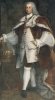
It was in this country that in 1750 Dom José I became the 25th king.

Name:  DjoseIportugal.jpg
Views: 3738
Size:  57.9 KB

Dom José I
King of Portugal 1750 – 1777


On July 31, 1750 Dom José I became the 25th King of Portugal with the death of his father King João V. Dom José I wanted to address the issues that plagued the country and to do this he decided to break from his predecessor’s governance and institute a new government with new faces and new ideas. His foremost appointment was the appointed of Sebastião José de Carvalho e Melo as the Secretary of State for Foreign Affairs and War. Sebastião José de Carvalho e Melo soon gained the king’s trust and support and the Portuguese government quickly came under his control. He ruled Portugal with a strong hand and throughout his rule his main policy was to strengthen the monarchy and to use it for the furtherance of a comprehensive scheme of reforms.

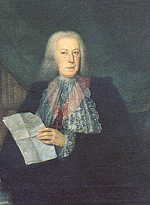
Sebastião José de Carvalho e Melo was a son of a minor noble, educated in Portugal at the University of Coimbra. In 1738 he went to live in London as Portugal’s ambassador to England and in 1744 moved to Vienna as Portugal’s ambassador to the Austrian Empire. In both cities he came into contact with new ideas and came to understand Portugal’s backwardness and the need change it.


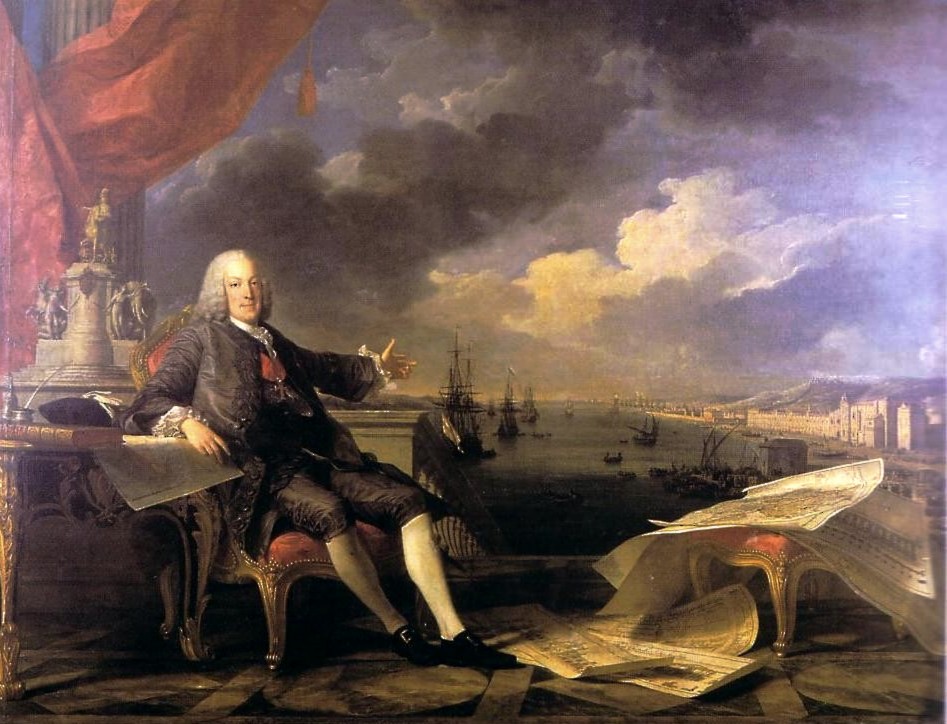
Sebastião José de Carvalho e Melo
Marquês de Pombal
Head of Portuguese Government 1750 – 1782
Father of Modern Portuguese Empire

Portugal is country rich in History and accomplishments as well as great historical figures such as Dom Afonso Henriques, Infante Dom Henrique, Vasco da Gama and many more. While these were great people and their accomplishments were instrumental in Portugal’s history, the man who shaped Portugal into the country it is today was Sebastião José de Carvalho e Mello or as more commonly called “Marquês de Pombal”.

It was his vision that transformed Portugal from a backwards-declining empire to one of the largest and most powerful empires today. His reforms not only touched all regions of Portugal and its empire but all aspects of Portuguese society. He laid the groundwork and provided the vision that was continued by his successors to today. It is safe to say that Portugal would not be the country it is today was it not for Sebastião José de Carvalho e Melo.

Last edited by Lusitania; October 28th, 2009 at 04:07 AM..
Reply With Quote
  #10  
Old October 23rd, 2009, 01:15 AM
Lusitania Lusitania is offline
Member
 
Join Date: Oct 2009
Location: Winnipeg / Lusitania
Posts: 495
Thank all for your warm welcome,

Quote:
Originally Posted by Dr. Strangelove View Post
Welcome to the board! The more iberians here the merrier.

Somehow I have the feeling that this is going to end with Portuguese Galicia by 1820.

Now why would you think that it will take till 1820? just kidding. I promise that Galicia does not suffer from anything that the rest of "Spain" does not go through.
Reply With Quote
  #11  
Old October 23rd, 2009, 01:44 AM
Dan1988 Dan1988 is offline
Τέλι τέλι τέλι κάλπικε ντουνιά
 
Join Date: Feb 2007
Location: אקאָדיה
Posts: 1000 or more
Welcome, Lusitania! I like your TL so far - s'il vous plaît, continue!
__________________
Ο Πρόσκοπος λέει την αλήθεια και κρατά το λόγο του. (Ο Νόμος του Προσκόπου)
Reply With Quote
  #12  
Old October 23rd, 2009, 02:48 PM
Lusitania Lusitania is offline
Member
 
Join Date: Oct 2009
Location: Winnipeg / Lusitania
Posts: 495
New Faces & New Ideas


The Marquês de Pombal first major test was the devastating Lisboa Earthquake of 1755 it was his handling of the earthquake and the recovery effort that won him his second major supporter. In 1763 Dom João Carlos de Bragança Sousa e Ligne, the Duque de Lafões returned from London after living there for five years. While in London he had been elected a member of the Royal Society and had been a keen observer of the educational and knowledge disparities between England and Portugal.

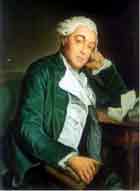
His correspondence with the Marquês de Pombal and the King starting in 1759 regarding educational disparities and the need for Portugal to modernize its own institutions least it fall even more behind had greatly impressed Pombal and with the support of the King who was the Duque de Lafões cousin recalled him to Lisboa in 1763. In 1764 he became the Secretary for Education and Science and over the next forty years would use that position and the support of the government to spearhead the countries educational and scientific progress. More importantly the Duque de Lafões provided the Marquês de Pombal with much needed support amongst Portugal’s leading nobles. With his help and support many nobles who personally continued to appose Pombal came to support his reforms and work.


Dom João Carlos de Bragança Sousa e Ligne, Duque de Lafões

On the economic front two transplanted Portuguese Jerome Rattan and Guillermo Stephens became the two leading industrial supporters and industrialists in the country. Both Rattan a Frenchmen by birth and Stephens a Englishman by birth started in the middle of the 1760s at the beginning of the economic revolution in Portugal their rise in Portugal’s economic and trade revolution. These two became the leading investors and industrialist in the country and eventually ended up having investments in almost every part of the Portuguese economy and empire. They played a major role in the establishment of factories throughout the country as well as financing many commercial enterprises. So great was their success that their support and contacts provided much of the impetus to the much of the economic investments over the next quarter century. In 1771 Jerome Rattan became the Secretary of Commerce and personally owned over 100 factories throughout the empire by the turn of the century.

One of the greatest obstacles to Portugal’s modernization was the Portuguese Roman Catholic Church. In 1750’s the church along with the Jesuits order controlled great parts of the country and vehemently apposed any changes to the government’s policy and modernization.

The schism between the Portugal and the Catholic Church - Holy See along with the subsequent expulsion of most of the Religious Orders from the Portuguese Empire brought great challenges as well as great opportunities for Portugal. Religious reform might have been one area that Pombal might have failed were it not for the return to Lisboa of Luís António Verney in 1765 from Rome. It was his leadership and enlightened approach along with his openness that allowed for the modernization of the Church and made it a partner in the modernization of the country.


Saint Luís António Verney

While on the military front it was the friendship of Dom José António Lobo da Silveira, the Marquês de Alvito and Marechal General of all Portuguese forces in Portugal starting in 1762 that provided the Marquês de Pombal with the military support to counter many of his biggest critics and enemies.


The partnership of the Marquês de Pombal’s and these men led to unprecedented political, social, economic and religious changes in the country. It was these individuals who provided the great support and in many ways implemented many of the reforms outlined by Pombal. By 1770 the group came to be known as the “Os Apóstolos de Pombal” for their continued support and advocacy of his policies and reforms.
Reply With Quote
  #13  
Old October 25th, 2009, 10:12 PM
Lusitania Lusitania is offline
Member
 
Join Date: Oct 2009
Location: Winnipeg / Lusitania
Posts: 495
November 1st 1755 9:36 AM
Lisboa, Portugal
Kingdom of Portugal

Maria and her family were on their way back home from church, she and her family had attended morning mass and being a holiday the church had been fuller than normal and mass had taken longer than normal. As she walked along the cobblestone street she couldn't stop thinking of all the things she had to do at home. Holiday or not she had a house to keep and family to feed. Speaking of which, her two sons and daughter were at it again; with the two boys picking on the younger sister again.

"Stop it, I Hate you" Lidia yelled at both Manuel and Joao who snickered at Lidia discomfort.

"Lidia" rebuked Maria

"I am sorry mother" replied Lidia apologetic with her eyes downcast.

"Do not think you two are off the hook, when we get home I will have words with both of you" she added to the boys who now looked abashed.

Maria and her family continued along the narrow street, Manuel her husband leading the procession followed by the children and her bringing up the rear. Just as her husband got to the corner of her street she felt the ground heave under her and shake.

“Ai meu Deus” she screamed

All around her Maria her people screaming both on the streets as well as in the building around her but she paid scant attention as all her attention was on her family in front of her.

Maria along with her children was knocked down by the falling pieces of brickwork. She saw Manuel get up and help his sister Lidia, who was screaming on the ground paralyzed with fear. When she saw both her other son and husband also getting up she thanked god for his blessing.

The moment of relief was short lived as the ground shook again and more pieces of brickwork fell around them.

“Manuel, Joao take Lidia to corner and make sure your father is alright” she ordered in a stern voice

Both boys looked confused at her orders, both of them had been moving towards her but they obeyed her orders and they carried their sister to the corner where their dad was. Just as they reached him a third shock was felt. The last thing Maria saw was her family safe before the entire wall of the building fell on her.

*********************************************

November 1st 1755 10:42 AM
Lisboa, Portugal
Kingdom of Portugal

Joaquim felt both exaltation as well as dread; he was alive which was more than he could say for so many of the people in the city. He had escaped the earth tremors and the falling buildings. He had seen hundreds of people get buried alive as the walls collapsed on them but his luck had been with him.

He sat by the fountain trying to figure out what to do next. He was supposed to leave for Vila Franca de Xira today but now felt unsure what to do. While there was so much destruction around him there was also a lot of great opportunity. He had already profited a little but that was miniscule compared to the opportunity here.

He was still undecided when he heard someone yelling

“The sea is retreating and you can see all the ships that had sunk”

Joaquim quickly got up and rushed towards the harbour, if there were sunken ships then there would be treasure he told himself. By the time he got to the harbour a multitude of people could already be seen combing along what had been the sea bottom. Spread out on the ground was countless ships and treasure. Already some of the closer ones were teaming with people.

He made his way down to the ground and raced towards one of the ships further out. He passed several groups of people some still looking for their treasure like him others already making their way back with whatever they could find. He passed a group fighting over something, there was two men on the ground not moving and two other men fought off three other. He steered around them and continued on his quest towards the three mast ship in front of him.

Slowly he made his way towards his prize dreaming of the riches he would find, as he neared it and his excitement grew he started feeling the ground rumble again but he ignored it there was nothing that could hurt him out in the open. As he got closer to the ship the rumbling became loader.

His excitement retreated and he started feeling uneasy, he started feeling his luck abandoning him. Joaquim finally felt uneasy and stopped looking for the source of the constant rumbling that continued to get louder. He turned to the west towards the sea and wished he had not.

In front of him travelling at an incredible speed was a wall of water, higher than a castle wall. His last thought before it over took him was this must have been how the Egyptians felt like when Moses had brought the walls of water on them. This was quite funny that he even thought that since he had been in a church since his 12th birthday.

************************************************** *****

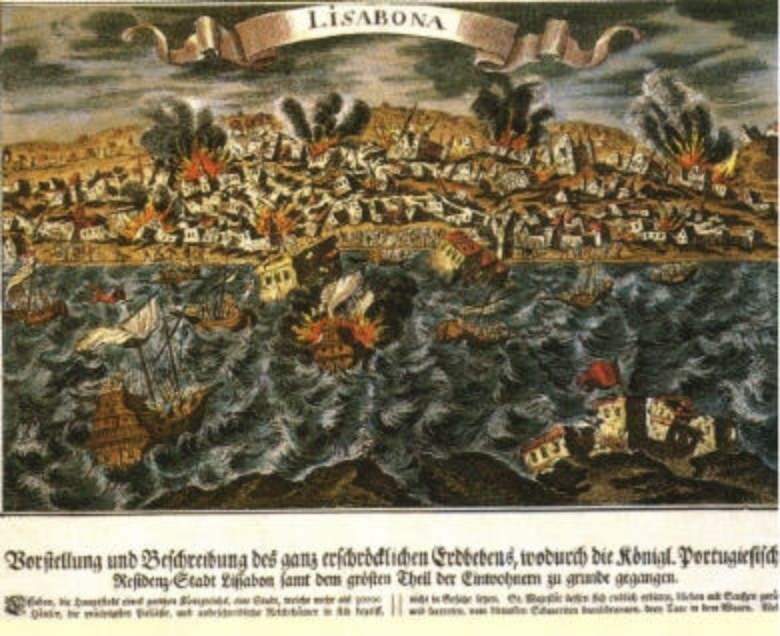
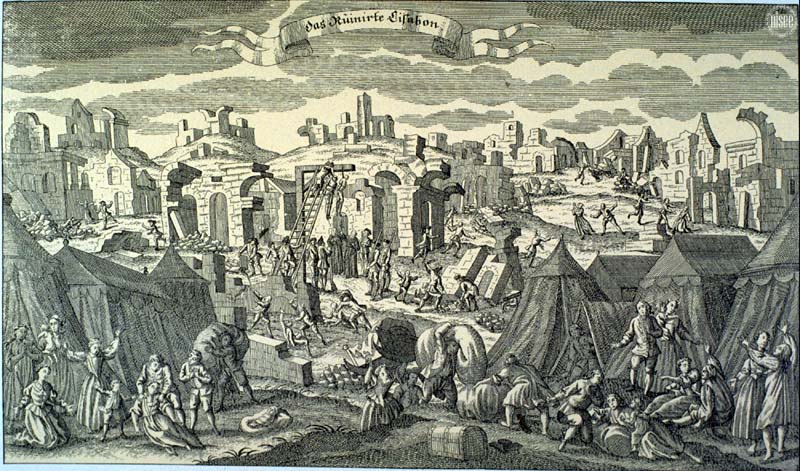
Lisboa Earthquake of 1755


Lisboa Earthquake of 1755


Lisboa in 1750s before the earthquake was one of Europe’s leading cities with over 250,000 people, rich in history and monuments constructed from the riches of its Empire.

The earthquake was one of the most destructive and deadly in history, killing between 30,000 and 60,000 people. The quake was followed by a tsunami and fire, resulting in the near total destruction of Lisboa. Many monuments and buildings were destroyed either by the earthquake, tsunami or subsequent fires. This included monuments, government buildings such as the palace, churches and cathedrals as well as the houses and businesses of thousands of people.

Dom José I immediately ordered the government to provide relief to the people and rebuild the country. He put the Marquês de Pombal in charge of this enormous undertaking. The Portuguese government under Pombal’s guidance immediately began a program of helping the survivors and preventing the spread of disease. Within three days the fires raging throughout Lisboa were brought under control. The army was brought in to maintain order and stop people from fleeing. The survivors were housed in tent cities (shanties) that were created around the capital; corpses were quickly removed and in many cases buried at sea.


The aftermath of the Lisboa Earthquake, showing the rebuilding of the city along with the tent city and the government hanging thieves


Dom José I who was out of Lisboa when the earthquake struck was also left without a home as the royal palace had also been destroyed in the earthquake. He developed a fear of living within walls, and for the duration of his reign the court was accommodated in a huge complex of tents and pavilions in the hills of Ajuda, then on the outskirts of Lisboa. It was only after his death that Dom José II his successor began the building the Royal Palace of Ajuda, the current residence of the Portuguese Monarchy, which still stands on the site of the old tented camp.

The Marquês de Pombal started to plan the rebuilding of Lisboa; he implemented several decrees that prohibited private construction initiatives. He felt developing a new, perfectly ordered city that magnified the splendour of the empire both a duty as well as an opportunity. He along with many others felt that the tremors would be the catalyst that would tear Lisboa and in turn Portugal from its medieval decadence and force it to acknowledge the necessities of an increasingly modern world.

The king and the Marquês de Pombal hired architects and engineers, who planned the reconstruction. Pombal wanted a city that would be built in an orderly fashion. In less than a year, Lisboa was free from debris and undergoing major urban works. These works were well planned and undertaken, rebuilding the areas with the highest level of damage along a wide–street grid system, while the less damaged areas were restored to their original street and building design schemes. Portuguese engineers, such as Manual de Maia and Eugénio dos Santos left their mark all over Lisboa with their work. By 1760 the remaining shanties were ordered demolished by the government and the last people still living in tents moved into the new buildings that had been built.

All Portuguese provinces were ordered to help the survivors and the rebuilding effort but in many cases the lack of proper roads hindered the relief effort. Help came from all Portuguese provinces including those in América, África, Índia and Ásia.

To combat disease a new law was passed requiring all people in Lisboa and the surrounding areas including the shantytowns to dump their human waste and garbage into refuse wagons that passed 4 times a day. The throwing of human waste out the window also became against the law. New aqueducts were built to bring fresh water into the area. Disease such as cholera was reduced throughout the capital region with the implementation of the new sanitation and clean water. In 1762 the new law was enacted throughout the rest of the country requiring local governments to setup regular human waste and garbage collections as well as provide clean water to all their residents.

From the onset of the rebuilding process labor shortages started being one of the biggest limiting factors so starting in 1756 thousands of Portuguese Américan Natives were brought to Portugal to work on the rebuilding of Lisboa and other earthquake damage areas. This was followed by additional workers from other parts of the empire in the subsequent years.
Reply With Quote
  #14  
Old October 26th, 2009, 12:59 AM
Dan1988 Dan1988 is offline
Τέλι τέλι τέλι κάλπικε ντουνιά
 
Join Date: Feb 2007
Location: אקאָדיה
Posts: 1000 or more
Hmm, that's interesting. The claustrophobia bit is a nice touch to the TL.
__________________
Ο Πρόσκοπος λέει την αλήθεια και κρατά το λόγο του. (Ο Νόμος του Προσκόπου)
Reply With Quote
  #15  
Old October 26th, 2009, 02:00 AM
Gonzaga Gonzaga is online now
Member
 
Join Date: Sep 2006
Location: Porto Alegre, Brazil
Posts: 1000 or more
Send a message via MSN to Gonzaga
Quote:
Originally Posted by Dan1988 View Post
Hmm, that's interesting. The claustrophobia bit is a nice touch to the TL.
Actually it is completely like OTL. After the earthquake Joseph I became so affraid of closed places that he lived in a tent until the end of his life.

I noticed that you made a reference to a José II. Does it mean that ITTL José I had a son? Or is the future king other relative? Anyway, not having queen Maria "the Crazy" can only be good news.
__________________
Because we all love mad kings: Madness and Greatness: a history of Portugal (1578 - 1640) Last update: 08/June/2010
Reply With Quote
  #16  
Old October 26th, 2009, 02:12 AM
Dan1988 Dan1988 is offline
Τέλι τέλι τέλι κάλπικε ντουνιά
 
Join Date: Feb 2007
Location: אקאָדיה
Posts: 1000 or more
Quote:
Originally Posted by Gonzaga View Post
Actually it is completely like OTL. After the earthquake Joseph I became so affraid of closed places that he lived in a tent until the end of his life.
Proof that OTL is ASB.
__________________
Ο Πρόσκοπος λέει την αλήθεια και κρατά το λόγο του. (Ο Νόμος του Προσκόπου)
Reply With Quote
  #17  
Old October 26th, 2009, 08:12 PM
Archangel Archangel is offline
Battery-powered Bureaucrat
 
Join Date: Nov 2007
Location: Portugal
Posts: 1000 or more
Verney as a saint and staying in portugal means both an enlighted Church in Portugal and the enactment of much needed educational reforms to propel the Portuguese economy and society.
Reply With Quote
  #18  
Old October 26th, 2009, 09:21 PM
Lusitania Lusitania is offline
Member
 
Join Date: Oct 2009
Location: Winnipeg / Lusitania
Posts: 495
Quote:
Originally Posted by Gonzaga View Post
I noticed that you made a reference to a José II. Does it mean that ITTL José I had a son? Or is the future king other relative? Anyway, not having queen Maria "the Crazy" can only be good news.


The Reign of José II is the cornerstone of the advancement, stability and progress witnessed in the Portuguese Empire. Lots more on that in future posts.

Quote:
Originally Posted by Archangel View Post
Verney as a saint and staying in Portugal means both an enlighten Church in Portugal and the enactment of much needed educational reforms to propel the Portuguese economy and society.


Not wanting to spoil anything I will state that your assessment is a little understated, for nothing will change in the Empire unless the Church changes.


Next post will be on the economic upheaval sorry I mean change, then we will deal with church and all of its ...
Reply With Quote
  #19  
Old October 28th, 2009, 04:04 AM
Lusitania Lusitania is offline
Member
 
Join Date: Oct 2009
Location: Winnipeg / Lusitania
Posts: 495
Town of Blackburn
Kingdom of England
March 22, 1768

The mood in the Forester Pub in the town of Blackburn was very angry. Several of the towns leading business men had gathered to decide what to do regarding the disposition of the upstart named James Hargreaves.

“I tell you if we do not do something about this, it is going to be the end of us” replied James angrily, the proprietor of one of the towns leading town’s business men.

“Do not fret yourself, I have a plan to get rid of Hargreaves once and for all” answered John the towns major weaver with a gleam in his eyes before emptying his tankard.

He looked around the table at the other five men seeing their eagerness matching his ”Tomorrow night we will get all of our employees and their friends down at the Warf, then we will march down to that trouble makers house and run him and all his cohorts out of town.”

The men all looked up and smiled at each other at the prospect of problem being resolved and their profits recovering.

“It would not be our fault if something tragic was to happen; it is always hard to control desperate men who are defending their livelihood” joked a heavy set man named Walter.

The group ordered another round and continued plotting the demise of the much maligned entrepreneur James Hargreaves. Finally after their drinks were gone they each got up and made their way out into the chilly spring evening.

Unnoticed in a corner of the pub a nondescript man continued to nurse his ale until he was sure no one was noticing him. He slowly got up and out the door from there he made his way to the Royal Oak Inn where he and his assistant made plans for the next day.

James Hargreaves was having diner with his wife and daughters when there was a loud knock. James became very startled at the reason someone would be knocking at his back door. He wearily got up and keeping himself between the person or persons at the door and his family he opened the door.

“Can I help you” James inquired as he took notice of the appearance of the gentlemen on his back doorstep.

“James Hargreaves?” the man inquired when James acknowledged the question the man continued “We do not have much time but a mob is making its way to your workshop and house at this very moment with the intention to ruin you and your family” the man said in a very fast and accented voice.

“What do you mean, and who are you anyway?” demanded James taken back by the news.

“Your local competitors have decided eliminate what they perceive as an unfair competitor, they mean to destroy your business and if you or your family gets in the way they will not be terribly upset” replied the stranger

For the first time since he opened the door he became aware of the startled exclamation and anxiety emanating from his wife and daughters behind him.

“You still have not explained who you are?” replied James wife as she came up and stood beside her husband.

The stranger was interrupted from answering by the arrival of another stranger “Master the mob is getting closer we have less than few minutes before they are here” said the new stranger.

The gentlemen took a second to consider the news before addressing the servant “Get the wagons here right away, hurry.”

He turned back to face the Hargreaves, “I am sorry, my name is Jack Silvestre[1] and I was in own on business hopping to meet with business men like yourself and I overheard several people talking. I rushed here as soon as I could to offer any assistance I could, fearing the actions of these people”

Before James could answer the sound of a wagon was heard, but although still a little a ways the noises of the mob could already be heard. His wife acted faster then he did. She directed the girls to run to their rooms and get whatever they could and bring it to the wagon out back. James finally reacted and rushed to his workshop.

“Do you need any help” Jack asked following James down the hall.

“Yes” replied James

Together they loaded several of the James machines “Spinning Jenny” onto the wagon behind the family along with other personal belongings. They took off just as the mob reached the front of the house. By the time they reached the end of the street the mob was ransacking the house and workshop and fire could already be seen from the second floor windows.

“What are we going to do, what is to become of us” asked Mrs. Hargreaves as James attempted to comfort her, he was unable to answer her though still in shock over the attack and narrow escape.

“Do not worry, I represent some very influential and powerful people who can help you and your family`` answer Jack from the front seat as they made their way out of town.

[1] Jack Silvestre was actually Joaquim Silves and he travelled throughout England from 1764-1786 making contact with English businessmen and entrepreneurs.


************************************************** ***********

Economic Reforms


While living in London from 1738 to 1744 the Marquês de Pombal was greatly impressed with capitalism and the capitalist who made it possible. He viewed the lack of capitalists in Portugal as a determent to its future. He was determined to create the conditions necessary for the creation of capitalism in Portugal and envisioned a new capitalistic class allied with the monarchy that would drive the Portuguese economy and create great wealth.

When Pombal came to power Portugal practically imported everything it consumed, the purchase of these goods had been made possible by the revenue from the gold and diamonds from Brasil. Pombal’s first priorities when he came to power were:
1) To asses the decline in revenue from Brasil and the implications this would have on the government’s budget
2) The need to develop Portuguese national industries to manufacture the goods needed by Portugal and to reduce its economic dependency on England
3) To increase the governments revenue in Portugal and its overseas provinces.
Starting in 1751 the government promoted the creation of national industries throughout the country. The government started by creating a gunpowder factory and sugar refinery this was followed by an increase in shipbuilding and its related industries. To help in the rebuilding of Lisboa and other areas building material factories were created. By 1760 silk as well as wool, paper, furniture and glass industries had been created. The growth of these and other national industries continued throughout Pombal’s term and beyond.

To promote commercial development in both Portugal and its overseas provinces several charter companies were formed, these companies were given monopolist rights in exchange for their investment and development of a particular industry or region. The first company formed was “Companhia Geral das Pescarias Reaes do Reino do Algarve” which was created in 1753 to develop and manage Algarve’s sardine and tuna fisheries. That same year “Companhia da Ásia Portuguesa” was formed to develop and manage trade with the Portuguese colonies in Índia and Ásia.

In 1755 the “Companhia do Grão-Pará e Maranhão” was formed to develop and increase commerce in Northern Brasilia. This was followed by the "Companhia Geral da Agricultura das Vinhas do Alto Douro" formed to regulate and protect the wine growers of the Portugal’s Northern Provinces. In 1756 the “Companhia da Pesca da Baleia” was created to regulate fishing and whaling. In 1759 a new company was created called “Companhia de Pernambuco e Paraíba” to develop and increase commerce in North-Central Brasilia.

To regulate and stimulate the economy several laws were enacted that tried to combine the best of Europe’s economic laws. In 1755 the “Junta do Comèrcio de Lisboa” was created, it replaced an older out of date association of merchants. A similar Chamber of Commerce was created in Porto in 1763. These institutions promoted both commercial and manufacturing development in Portugal and all its provinces. In 1759 the “Junta do Comèrcio” in Lisboa started offering the first commerce courses to Portuguese entrepreneurs and business owners and their staff. In 1766 the “Junta do Comèrcio” in Porto also started offering the same courses.

To further increase Portugal’s trade in África, Índia and Ásia several new companies were also created. In 1760 the rights for Portuguese trade in Índia and Ásia were taken from the "Companhia da Ásia Portuguesa” and given to two new companies: “Companhia da Índia Portuguesa” and “Companhia de Timor e Macau”. In 1765 the Portuguese administration and trade in África was also changed with the abolishment of the Captaincies and the creation of three new companies that received trade rights on the Áfrican continent. The “Companhia de Angola” was created to exploit the resources in Angola and the Congo Basin, the “Companhia de Moçambique” was created to exploit the resources in Moçambique and East África and the “Companhia de Bissau” was created to exploit the Portuguese Trade in West África.

In 1762 to help simulate the economy the government abolished all laws discriminating against Protestants giving them the same rights as Catholics. This allowed both Portuguese citizens as well as foreigners to invest in Portugal.

The difficulty in transporting relief supplies to Lisboa from other regions of Portugal to help in the earthquake relief and subsequently in the rebuilding effort convinced the government to initiate a countrywide road construction project. In 1756 the construction of a network of roads spanning the country was started, the plan was to connect the leading cities of Portugal together to spur economic development. They eventually would connect the entire country together providing access to all corners of Portugal.

These roads became the catalyst for the industrial development in Portugal between 1760 and 1800. It became possible for businesses to manufacture their products anywhere in Portugal and in turn transport them throughout the country and even send it to port for export. Thousands of miles of new roads were built throughout the country. These roads became known as “Estradas do Rei”; they had no tolls, were paved and elevated allowing their use year round. New bridges were built across all of Portugal’s rivers. The building of these roads enabled the Portuguese economy to grow substantially and for the first time they also provided the Portuguese Army with a network of roads year round. This would come to be one of the contributing factors in the defense of Portugal during the Peninsula Wars.

New decrees were also issued ordering local governments to built additional local roads connecting the local areas “concelhos” to the “Estradas do Rei”.


Name:  Portugal 1799.gif
Views: 3501
Size:  184.9 KB

Royal Roads built in Portugal between 1756 -1795
Roads built 1756 – 1776 shown in Yellow
Roads built 1777 – 1795 shown in Red

Pombal established a procurement department in all the major Portuguese Embassies through out Europe with the object of investigating and securing new industrial and technological ideas for Portugal.

In the year 1767, in exchange for assisting James Hargreaves of Stan Hill escape from an angry mob to Nottingham the Portuguese embassy in London received the design specs for the multi-spool spinning wheels called “spinning jenny”. In 1769 James Hargreaves moved to Portugal and became a principal shareholder in a new company called “Companhia de Algudão” situated in Guimarães. The company was created to manufacture and operate the “spinning jenny”. To provide Portugal with the cotton, the production of cotton in Brasil was increased and new cotton plantations were started in Moçambique north of the Zambeze River and in Southern Angola. Additional machines were made for the wool and linen factories in Castelo Branco and Porto respectively.

The Portuguese government recruited businessmen and technicians from Europe’s production centers and provided them with exclusive rights for their products in Portugal. One of the most successful foreign businessmen who became Portuguese by naturalization was Jerome Rattan, Frenchman by birth. He became one of Portugal’s leading industrialists with factories throughout Portugal as well as investments in agriculture and forestry. He was a leading member of both “Junta do Comèrcio” and a leading investor in many overseas investments. Similarly William Stephens (Guillermo) a Englishmen by birth, started a glass factory in Marina Grande which in time became Portugal’s largest and one of the largest glass and Crystal companies in the world. These two individuals would become the principal economic proponents and advocates of the new economic and industrial systems in Portugal.

The increase in commerce in Portugal and its overseas provinces started causing shortages in cargo space as the number of Portuguese ships was not enough to meet the demand. In 1764 the government eased the restrictions on shipping Portuguese products on foreign ships. In 1760 the government along with private investors invested large amount of money to increase Portugal’s shipbuilding capacity along with the attendant trades. This investment allowed Portugal to double its shipbuilding capacity by 1785. The capacity was further expanded by the expansion of shipbuilding enterprises and related industries in Rio de Janeiro, Bahia and Goa. The number of Portuguese ships including the large merchant ships sailing between Portugal and its overseas provinces grew ten fold during this time frame.

New taxation laws were enacted that placed a greater burden on the wealthy and upper class. Initially the government was forced to borrow large amounts of money to finance the rebuilding and infrastructure construction but as the government’s revenues increased the amount borrowed from abroad decreased so that by the end of Dom José I reign Portugal no longer needed to borrow from abroad to finance its projects and expenditures.

By 1775 the government had been able to stabilize the revenue Portugal received from Brasil although it was still a shadow of its former self as the revenue from the gold and diamonds was greatly reduced due to the exhaustion of the gold and diamond mines. The government’s revenues and Brasil’s economy became based on the diversified agricultural economy promoted by both government policy and the two trading companies and by the increase in manufacturing that was occurring in most of Brasil major towns and cities especially in the south.

The revenue Portugal and the Portuguese people realized by the formation of the companhias was enormous, for example the "Companhia Geral da Agricultura das Vinhas do Alto Douro" was able to increase the revenue Portugal received from wine in the Douro Region by ten fold and was able to triple production while at the same time imposing high quality standards. The farmers and Portugal both saw a huge economic benefit from the management by the companhia. The two companhias in Brasil as well as the companhias throughout the Empire played a huge part in the development and growth of the various provinces and Portugal as a whole.

The gigantic leap in manufacturing in Portugal and subsequently in the overseas provinces provided the goods and products for its needs and as well for export. The increase trade provided the government with additional revenue and reduced Portugal’s dependencies on foreign goods. By 1776 Portugal had greatly reduced the manufactured and consumer goods it imported to the point that its exports were three times greater than its imports. The nature of the products imported had also changed, in 1755 Portugal was exporting raw materials and importing manufactured goods, by 1775 the bulk of the imports were raw materials for its factories and most of its exports were manufactured goods.

The revenue from Portugal’s overseas provinces also greatly increased; first in Índia then subsequently in East Ásia and finally in both África and Macau region as trade and economic activity increased in these provinces as they grew in size and were better developed and managed.

The economic development of Portugal and its overseas provinces between 1755 and 1795 was remarkable. By 1778 over 1000 factories were operating in Portugal. This number did not include the local traditional craft shops that also co-existed with the new factories. The Portuguese government had been able to liberate Portugal economically from the various English factors that had dominated and at the same time repressed Portugal’s development. The government’s revenue and spending had also been restored allowing the government to rebuild Portugal, invest in the infrastructure and defenses.


Marquês de Pombal

Last edited by Lusitania; October 28th, 2009 at 04:13 AM..
Reply With Quote
  #20  
Old October 28th, 2009, 05:27 PM
Archangel Archangel is offline
Battery-powered Bureaucrat
 
Join Date: Nov 2007
Location: Portugal
Posts: 1000 or more
Clever choice of James Hargreaves to start an industrial revolution in Portugal.
Reply With Quote
Reply

Thread Tools
Display Modes

Posting Rules
You may not post new threads
You may not post replies
You may not post attachments
You may not edit your posts

BB code is On
Smilies are On
[IMG] code is On
HTML code is Off

Forum Jump


All times are GMT. The time now is 08:52 PM.


Powered by vBulletin® Version 3.8.4
Copyright ©2000 - 2010, Jelsoft Enterprises Ltd.